Sports injuries tend to be soft tissue, skeletal
and joint problems. These are defined as strains, sprains, dislocations,
fractures, lacerations, cuts, abrasions, bruises and blisters. Obviously some
of these are more serious than others and should always be checked out by a
healthcare professional before you consider home treatment. However there are
many practical self-help things you can do at home to aid recovery.
Remember
that pain is there for a reason, so don’t just take painkillers and keep doing
sport as this can worsen your injury! Have a look at our ‘Homeopathic solutions
for sports injuries’ blog - there are many remedies there for these problems.
HOWEVER! Please seek medical advice before starting any self-help treatment so that you are sure of what you are treating. If your symptoms continue unchanged for more than 1 week, then contact your healthcare professional for further diagnosis and/or treatment. You may need on-going help from your homeopath, or need to see another professional such as an osteopath or acupuncturist.
Sports injuries tend to be soft tissue, skeletal
and joint problems. These are defined as strains, sprains, dislocations,
fractures, lacerations, cuts, abrasions, bruises and blisters. Obviously some
of these are more serious than others and should always be checked out by a
healthcare professional before you consider home treatment. However there are
many practical self-help things you can do at home to aid recovery.
Remember
that pain is there for a reason, so don’t just take painkillers and keep doing
sport as this can worsen your injury! Have a look at our ‘Homeopathic solutions
for sports injuries’ blog - there are many remedies there for these problems.
HOWEVER! Please seek medical advice before starting any self-help treatment so that you are sure of what you are treating. If your symptoms continue unchanged for more than 1 week, then contact your healthcare professional for further diagnosis and/or treatment. You may need on-going help from your homeopath, or need to see another professional such as an osteopath or acupuncturist.
Diet
Your diet is worth considering as this may
contribute to an increased frequency of sports injuries.
For example
Foods with a high GI (Glycemic Index) increase urinary loss of magnesium,
chromium and selenium, which in turn affects insulin and glucose levels. This can make you feel more tired (and so
prone to eating anything you can lay hands on when you get home) but also make
you more prone to get injured through tiredness. The whole subject of G.I. is
complicated, but an easy guide is that low G.I foods are unrefined/wholefoods
such as beans, fruit, vegetables and nuts, and high G.I. foods are more refined
- white bread and flour, white rice, and cornflakes.
Some people take Glucosamine and chondroitin as a
supplement to help support their joints.
Glucosamine is a building block for muscles, tendons, joints, cartilage,
skin and bone health. It also stimulates
production of synovial fluid in your joints and acts as an
anti-inflammatory. You can take up to
2000mg daily for 12 weeks.
RICE
The NHS
recommends using RICE to treat minor sports injuries which do not require
medical treatment. This helps to remind you of the 4 steps you can take (and its not eating lots of rice!):
· Rest: Reduce
your activity level and avoid further exercise.
· Ice: Apply
an ice pack to the affected area for 10-30 minutes. You can use a bag of frozen
peas wrapped in a towel as an ice pack, but don’t apply directly to your skin
or you will get an ice burn!
· Compression:
Use elastic compression bandages to limit swelling. Use this with care so that
you don’t limit blood flow and cause further problems.
· Elevation:
Raise the affected limb above the level of the heart as this also helps reduce
swelling and pain.
You may
find however that your injury is actually better when you have got moving, or
that you have a lot of bruising and swelling, in which case you need to see our
blog on which homeopathic remedies you can use to help treat your injury.
The most
common sports injuries
All these sports injuries can be treated with conventional treatment,as well homeopathic treatment. Where homeopathic remedies are mentioned, please see our other blog Remedies for sports injuries to get details of the strength of the remedy (i.e. 6C, 12C or 30C), how often to take the remedy and when to stop.
Abrasions
These are
the result of a fall on a hard surface and where the outer layers of skin are
scraped off.
· Clean the
wound carefully with diluted Hypercal tincture (available from Homeopathic
pharmacies) - this will remove any contaminates and the hypercal will encourage
healing, reduce pain and act as a natural antiseptic
·
Leave the
wound open to the air to encourage healing
Achilles Tendonitis
A common
injury in runners that occurs mainly from overuse. It is felt as pain in the
back of the ankle and if you continue to run on it, you increase the risk of
developing an achilles rupture.
· Don’t be
tempted to take painkillers and continue your sports routine as this can be a
recipe for disaster. Use relative rest
to take a break from the sport you were doing when you got injured, and don’t
do other sports which are similar! Try swimming or cycling as these don’t use
your Achilles in the same way.
· Consider
changing the shoes you were wearing at the time as these may be worn and have
contributed to the injury. If you exercise frequently, you may need to replce
your trainers as often as every three months.
· Anti-inflammatory
painkillers (such as ibuprofen) won’t actually help – tendonitis is a
degenerative injury rather than the result of an actual injury.
Homeopathic treatment:
This is generally a chronic
condition that can be helped by homeopathic treatment by a professional. Talk
to us about how we can help. However, you can initially take Arnica for a few days, followed by Causticum.
Anterior Cruciate ligament (ACL) injuries
The ACL
is a tough band of fibrous tissue which stabilises the knee. Partial or total rupture of the ACL can occur
when you change direction without moving your feet, change direction rapidly,
slow down abruptly or miss your landing from a jump. The injury can be anything
from a strain to a total rupture.
· Use rest
and elevation to help your knee heal
· You may
be given crutches to keep your weight off your knee and reduce the stress on it
· You are
likely to be given exercises to strengthen the muscles that support your knee
· Be
careful as your knee can give way afterwards as it is unstable
Homeopathic treatment:
This is generally a condition requiring professional homeopathic treatment since it takes quite a long time to heal. However see our blog on remedies to chose a remedy you can take in the inital stages.
Blisters
Fluid
filled sacs on the surface of the skin, caused by friction and commonly on the
hands or feet.
· Don’t
burst blisters! The fluid in the blister gets re-absorbed once the new skin has
grown
· You can
cover the blister with a plaster if it is in an area which will continue to be
rubbed. Use a Hydrocolloid dressing as
these have been shown to aid healing.
Homeopathic treatment:
If the blisters feel raw and burning and better for applying cold to them, try Cantharis. If they feel like burning heat, try Urtica.
Broken/fractured bones
If there
is any suspicion of a fracture or break, this must be checked by a healthcare
professional immediately. Delay in medical treatment can have serious consequences. Once this has been checked, and any
appropriate medical treatment given, you can use self-help measures to speed up
bone healing.
Homeopathic treatment:
Take Arnica 30c initially, then Symphytum 30c to encourage bone healing (but ONLY once medical help has been sought and the bones have been correcttly aligned) for 14 days and then Calc Phos 30c for 14 days (to support the healed fracture).
Bruised coccyx
This very
painful injury can be as a result of a fall, a blow to the area, friction or
strain (such as in cycling). You may
develop a bruise over the coccyx.
Frequently the pain feels worse for sitting for prolonged periods of
time or any position which applies direct pressure to the area.
· Other
than taking ibuprofen (to relieve the pain), and avoiding sitting or putting
pressure on your coccyx there is little conventional treatment.
Homeopathic treatment:
Take some Arnica initially to reduce the
bruising and then take Hypericum until the symptoms subside.
Bruises
A bruise
is caused by internal bleeding under the skin – from a trauma such as playing
sports, walking into something or falling over.
If you begin to bruise more than normal then tell your GP as it can be
caused by an underlying illness. However
there are simple treatments for bruises to help them heal:
Surface bruising
·
Can be
relieved by using an icepack
Homeopathic treatment:
Take Arnica 30c for a few days.
Deep tissue bruising
Sometimes
a trauma can lead to bruising deeper in your body – leading to inflammation and
pain. This is worth getting checked out
at A&E or at your GP for advice to ensure you haven’t damaged bones or
organs.
Homeopathic treatment:
Try Arnica 30c initially for a few days and then switch to Bellis Perennis 30C until the symptoms stop.
Frozen shoulder
This is
also called adhesive capsulitis and is an inflammatory condition that causes limited
or reduced range of motion of the shoulder. It can be caused by injury or
disease. Pain results in decreased motion of the joint, which in turn leads to
stiffness. The shoulder often feels painful, tight and stiff especially at
night.
· After
diagnosis, gentle stretching exercises will be recommended along with
medication to reduce pain and inflammation
Homeopathic treatment:
Again this is a condition which needs longer term treatment by a professional homeopath, but see our Remedies blog to choose a remedy to take in the initial stages before coming to see us.
Groin pull
A groin
(adductor) pull or strain occurs when the muscles of the inner thigh are
stretched beyond their limits. They can occur during a sudden change of
direction while running and quick starts and stops so are common in field or
court sports.
The area
will be painful to touch and commonly the pain increases with resistance
movements and stretching of the inner thigh and hamstrings.
· Use the
RICE method to aid recovery
· Avoid
aggravating movements for a few weeks and return gradually to sports
· You may
find anti-inflammatory painkillers are helpful
· Use
gentle groin stretches once the pain subsides
· Make sure
you warm up properly and aim to increase muscle strength in the area to prevent
further injury
Homeopathic treatment:
Try Arnica initially, and then either Rhus-tox, Ruta-Grav or Bryonia
Muscle soreness
This can
come on in the few days following unaccustomed or intense exercise. The good
news is that when you repeat the same activity the muscles will start to get
used to it as you begin to strengthen them.
·
Try
alternating heat and cold
·
If it’s
really sore you can try anti-inflammatories, but beware long term use as these
can affect your muscles ability to repair themselves. Instead make sure you
warm up and cool down, and don’t be a weekend warrior and do all your exercise
in one day!
Homeopathic treatment:
Take a few doses of Arnica 30.
Muscle cramps
Sudden,
tight intense pain in a muscle stuck in a spasm. They may be caused by an
injury such as a broken bone where the spasm tends to stabilize the area and
minimize movement, or may come on after a period of vigorous activity. There are many other causes of muscle cramps
which are not related to sports, so you should get medical advice if you
experience frequent cramps which are not bought on by activity.
·
Stretch
the muscle to stop the cramp
·
Try
applying heat to get the muscle to relax
·
Make sure
you are well hydrated before, during and after sport
·
Make sure
you warm up and cool down
Homeopathic treatment:
Try Hypericum or Causticum.
Shin splints
These are
pains in the muscles near the shin bones. They can be caused by running,
jumping on hard surfaces, or simple overuse. Shin splints are recognised as a
generalised pain along the front of the middle third of the shin bone. The
muscle responsible for raising the arch of the foot attaches to the shin at
this point.
If the area of pain is the size of a 50p or smaller, or the pain
suddenly increases, you may have a stress fracture which should be checked with
a healthcare professional.
· The key
element of treatment is to prop up the foot and avoid excess pronation and pull
on the tendon.
· Exercise
slowly to warm up the leg muscles and wear shoes with good support. Alternate
to run on a softer surface every couple of runs.
Homeopathic treatment:
Take a few doses of Arnica for a couple of days.
Shoulder pain (tendonitis, bursitis, shoulder
impingement)
The
shoulder bones are held together by a group of muscles called the rotator cuff
muscles. The shoulder has a shallow socket and any weakness of the muscles
makes it easy for the head of the shoulder to move in the joint. Certain sports
where your arm is held overhead (such as tennis or netball) may cause the
rotator muscles to stretch and allow the joint to become too mobile.
Tendonitis
(inflammation of the tendons of the rotator cuff muscle and tendons) can lead
to impingement syndrome since the inflamed tissue reduces space in the shoulder
and leads to the muscles being trapped by the upper arm and the shoulder blade.
Shoulder
pain can also be caused by a torn rotator cuff in the shoulders and is
recognised by aching pain and weakness in the shoulder when the arm is lifted
overhead.
· Anti-inflammatories
may be prescribed to alleviate the pain and inflammation, but you need to
address the core problem and strengthen the rotator cuff muscles.
Homeopathic treatment:
Try Arnica initially, followed by either Bellis, Bryonia, Rhus-Tox or Ruta-Grav.
Sprains and Strains
These
terms are often used interchangeably but a sprain is where there is a tear to
the ligaments that join bones together such as at the ankles, knees and
wrists. A strain is a pull or tear to the muscles or tendons which
attach to the bones.
Strains
are probably the most common sports injury which can happen to almost any
muscle in your body. No matter how carefully you warm up and cool down, you may
pull a muscle from overuse, being tired or from falling. The only other
prevention is to stay limber and work your muscles regularly. A strained muscle
happens when some of the fibres which make up a muscle get stretched too far,
but if most of the fibres tear then this is classed as a muscle tear.
·
Avoid
heat, alcohol, prolonged activity and massage of the affected area. Alcohol can
increase bleeding and swelling
·
Start
gradually using the muscle - it may spasm if overstretched so go slowly. You
are aiming to gradually re-lengthen the muscle fibres as they will have healed
shorter.
·
For
sprained joints, you may be given crutches or a stick to keep weight off the
joint. If you have a cane or single crutch, use it on the unaffected side to
help you lean away from the affected joint.
Homeopathic treatment:
Again, take Arnica initially for a few days, followed by either Rhus-tox, Causticum or Ruta-Grav.
Tendonitis
This is a
common sports injury which often occurs from overuse. It can cause a deep
nagging pain that is caused by inflammation of tendons.
· Treat
with rest, physical therapy, medication and changes to sports equipment or
technique
Homeopathic treatment:
Take Arnica initially for a few days, then try either Rhus-Tox (when the pain is worse when you start to move but gets better with continued movement), or Ruta-Grav.
Tennis elbow
This is
inflammation of the muscles of the forearm and the tendon that connects the
muscles to the bones of the elbow. When they become inflamed from overuse, the
pain is felt on the outside of the elbow.
· Tennis
elbow is best addressed with lessons since an issue with technique leads to the
overuse initially.
Homeopathic treatment:
Take Arnica for a few days and then take Ruta-Grav.
 Insect Bites and stings
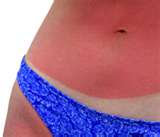 Please remember to put on the sun tan lotion when you spend
time outdoors on sunny days. It’s not just that you might get burned if you don’t;
it’s also because the sun doesn’t do your skin any good at all. It damages the
collagen, causing wrinkles, it causes freckles and sun-spots and worst of all
it can lead to skin cancer. Use at least an SPF 15 and re-apply frequently.
Please remember to put on the sun tan lotion when you spend
time outdoors on sunny days. It’s not just that you might get burned if you don’t;
it’s also because the sun doesn’t do your skin any good at all. It damages the
collagen, causing wrinkles, it causes freckles and sun-spots and worst of all
it can lead to skin cancer. Use at least an SPF 15 and re-apply frequently.  Injuries to fingers and toes